Ipswich House Price Growth Is Accelerating in 2026
Ipswich's median house price climbed to $901,825 in the March 2026 quarter, a 17.28% annual gain that is outpacing both Brisbane and the Queensland average, REIQ data shows.
How much are Ipswich house prices growing right now?
Ipswich house price growth reached 17.28% over the year to the March 2026 quarter, taking the median to $901,825, according to the REIQ Queensland Market Monitor. That annual rate is among the strongest recorded across South-East Queensland's local government areas, and the median has stayed under the $1 million mark even as the pace of growth picks up.
For context, that puts Ipswich ahead of the state as a whole. Queensland's statewide median house price rose 15.7% in the year to March 2026, per the same REIQ release, meaning Ipswich outgrew the average Queensland market by more than one and a half percentage points over the same twelve months.
Is Ipswich's growth speeding up or slowing down?
Ipswich houses gained 5.23% during the March 2026 quarter alone, compared with 3.18% growth in the Brisbane local government area over the same three months, according to REIQ. A corridor market growing faster than the capital's core, in the same three-month window, points to demand that is still building rather than fading.
Quarterly figures matter because an annual growth rate can mask a market that has already peaked and started to cool. Ipswich's quarter-on-quarter pace outrunning Brisbane's, in the same quarter, is a more current read than the annual number on its own, and it suggests the corridor has not yet reached the plateau that usually follows a strong run of growth.
Why is Ipswich attracting so many new residents?
Ipswich was Queensland's fastest-growing city in the year to 30 June 2025, expanding 3.5% and adding 9,138 new residents, according to Ipswich First using Australian Bureau of Statistics and Queensland Government Statistician's Office figures. Population growth at that scale is a direct driver of housing demand, and it helps explain why prices kept climbing through into 2026.
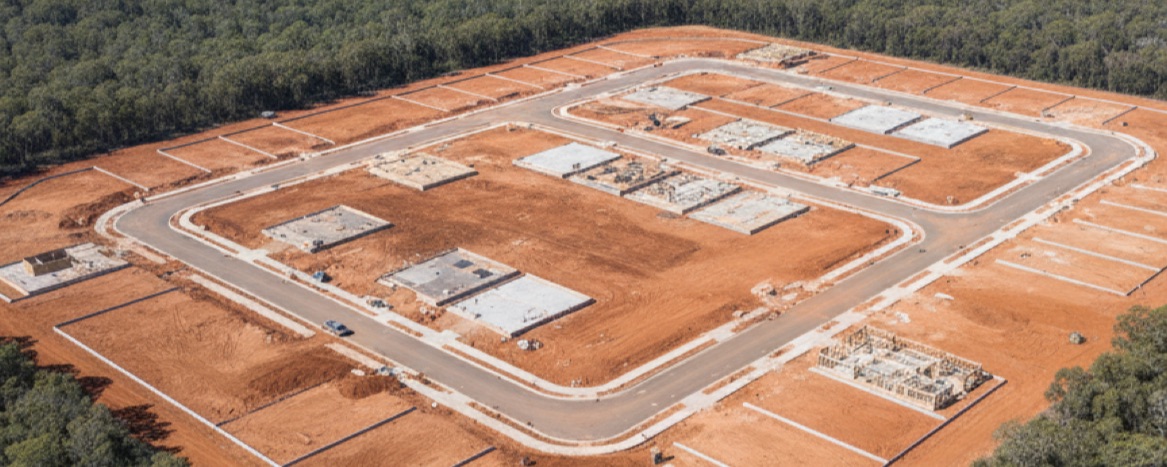
Much of that growth is concentrated in Ipswich's newer residential fronts, including the Ripley corridor on the city's eastern edge, where new housing estates have replaced semi-rural land over the past decade. More residents arriving each year means more competition for both existing homes and new-build land, which flows through into the price figures above.
How does Ipswich compare with Brisbane on price?
Ipswich's $901,825 median for the March 2026 quarter sits well below the Brisbane local government area's $1.46 million median for the same quarter, according to REIQ. Buyers priced out of Brisbane's inner market by roughly $560,000 at that snapshot are finding a house at close to two-thirds of the cost within commuting distance of the city.
That gap, combined with Ipswich's faster quarterly growth outlined above, is one reason the corridor keeps drawing buyers who might once have looked closer to the CBD. It is worth noting both figures are drawn from the same March 2026 quarter, so the comparison reflects a single point in time rather than a longer trend line.
What does the growth curve mean for someone planning to buy in Ipswich?
Buyers moving to Ipswich for this kind of growth are increasingly asking whether to commit to an off-the-plan build or buy a home that already exists. A completed house sold under a single contract of sale lets a buyer settle on a finished property without carrying the stage-by-stage risk of a construction contract. This is the approach used by builders such as Pearson Bros Homes, which sells completed, turnkey homes across the Ipswich corridor.
Whichever route a buyer takes, the figures above are worth checking against the specific suburb and settlement date in question, since corridor-wide medians can move by a percentage point or two within a single quarter.
Ipswich's figures to the March 2026 quarter point the same direction on every measure. The median house price sits at $901,825, well below Brisbane's $1.46 million for the same quarter. Annual growth of 17.28% to March 2026 beat Queensland's statewide 15.7% over the same year, and quarterly growth of 5.23% outran Brisbane's 3.18% over the same three months. Separately, in the year to 30 June 2025, Ipswich added 9,138 new residents and grew 3.5%, making it Queensland's fastest-growing city, according to Ipswich First. Taken together, the numbers describe a corridor that was still gaining pace, not levelling off, at the most recent reading.
Frequently asked questions
Is Ipswich still cheaper than Brisbane to buy a house?
Yes. Ipswich's median house price was $901,825 in the March 2026 quarter, compared with $1.46 million for the Brisbane local government area over the same quarter, according to the REIQ Queensland Market Monitor.
How fast is Ipswich's population growing?
Ipswich grew 3.5% in the year to 30 June 2025, adding 9,138 new residents and making it Queensland's fastest-growing city, according to Ipswich First using ABS and Queensland Government Statistician's Office data.
Is Ipswich growing faster than the rest of Queensland?
Yes. Ipswich house prices grew 17.28% in the year to March 2026, ahead of the statewide figure of 15.7% over the same period, according to REIQ.
Will Ipswich's house price growth keep accelerating?
No one can say for certain, but the most current REIQ data, for the March 2026 quarter, shows Ipswich houses still gaining pace at 5.23% for the quarter, faster than Brisbane's 3.18% over the same three months, a sign the corridor's momentum had not stalled as at that reading.
Sources
- REIQ Queensland Market Monitor, March 2026 quarter media release - www.reiq.com
- Ipswich First (ABS / Queensland Government Statistician's Office data), year to 30 June 2025 - www.ipswichfirst.com.au
General information only. Market data is indicative, sourced as noted and accurate to the date shown; it is not a forecast or a guarantee of returns. Nothing here is financial, tax or legal advice. Eligibility for concessions depends on your circumstances; obtain advice from your accountant or a licensed specialist before buying.